
Underground mine tunnels bring unique headaches you will never meet on regular construction sites: narrow drift widths, low headroom, rock debris, heavy dust, limited turning space, and rough uneven ground. Standard surface excavators cannot adapt to these confined underground conditions. Many buyers make the mistake of shopping purely by operating weight without mapping real-world tunnel constraints. The result is poor mobility, frequent unplanned downtime, and low work efficiency underground.
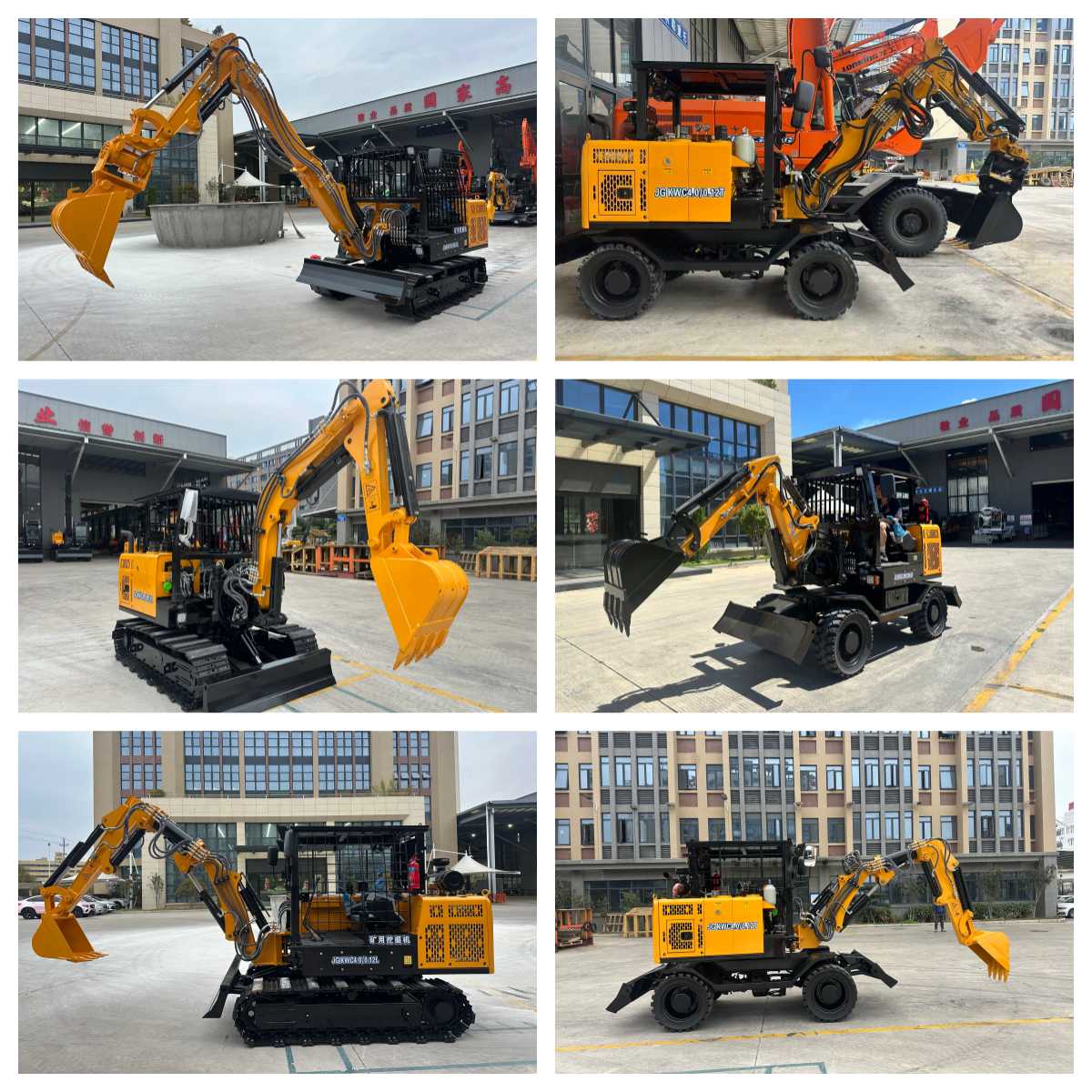
Two core machine configurations dominate underground mining sites: wheel-type mining excavators and crawler-type mining excavators. Beyond chassis choice, boom design also makes a huge difference. Boom-rotation, middle-arm swing and telescopic-boom variants each solve distinct underground pain-points. Before you place an inquiry, you need to clarify tunnel dimension, ground surface condition, primary work tasks and transit routes between working faces, including drifts, headings and main roadways.
1. Tunnel clear width & internal headroom (for drifts, headings and roadways)
2. Ground condition: hard compact floor, slippery rock, muddy ground
3. Main tasks: mucking, rock scaling, ditching, rock breaking, roadway repair
4. Travel requirement: frequent relocation between different working faces
5. Available attachments you plan to fit: breaker, ripper, rock bucket, drum cutter
Mucking is the core material-handling work in underground mines. This operation is also performed by dedicated muckers and tunnel mucking machines, while our underground mining excavators deliver flexible multipurpose performance compared with dedicated underground loaders.
The comparison table below lists our two core underground-optimized units with official part numbers.
Item
Wheel-type mining excavator
Model No.:KWC4.0/0.12T
Crawler-type mining excavator
Model No.:KWC4.0/0.12L
Best-fit mine condition
Hard, solid mine floor; frequent short-distance relocation across drifts and roadways
Slippery, muddy, uneven tunnel ground; poor-quality floor in headings and drifts
Travel performance
Fast travel speed for moving along main haulage ways
Strong grip on rough, loose rock ground, lower travel speed
Available boom options
Boom-rotation / Middle-arm swing / Telescopic boom
Boom-rotation / Middle-arm swing / Telescopic boom
Typical working attachments
Hydraulic breaker, rock bucket, ripper, drum cutter
Hydraulic breaker, rock bucket, ripper, drum cutter
Machine transport width
Compact 1400 mm for narrow drift access
Compact 1550 mm for narrow-tunnel entry
Key strength
High mobility, less track wear, easy service access
Outstanding grip & stability on bad underground ground
Maintenance focus
Wheel hub & brake inspection, dust-seal protection for hydraulic joints
Track chain cleaning, remove rock debris trapped in track links every shift
Match Boom Style To Your Underground Work
Boom can rotate at large angle without swinging the whole machine chassis. Ideal for tunnel side-wall rock scaling, side mucking work in narrow drifts. You finish side excavation without repeatedly repositioning the full machine, saving huge amounts of time in narrow spaces. This boom solution works for both wheel-type mining excavators and crawler-type mining excavators.
Middle-arm independent swing design. Perfect for corner cleaning and dead-angle mucking inside cramped tunnels. Great for roadway shaping work when drift width is extremely limited.
Telescopic boom extends working reach. Suitable for deep mucking, high-wall cleaning and roadway repair jobs when you need extra digging distance without moving the main machine body.
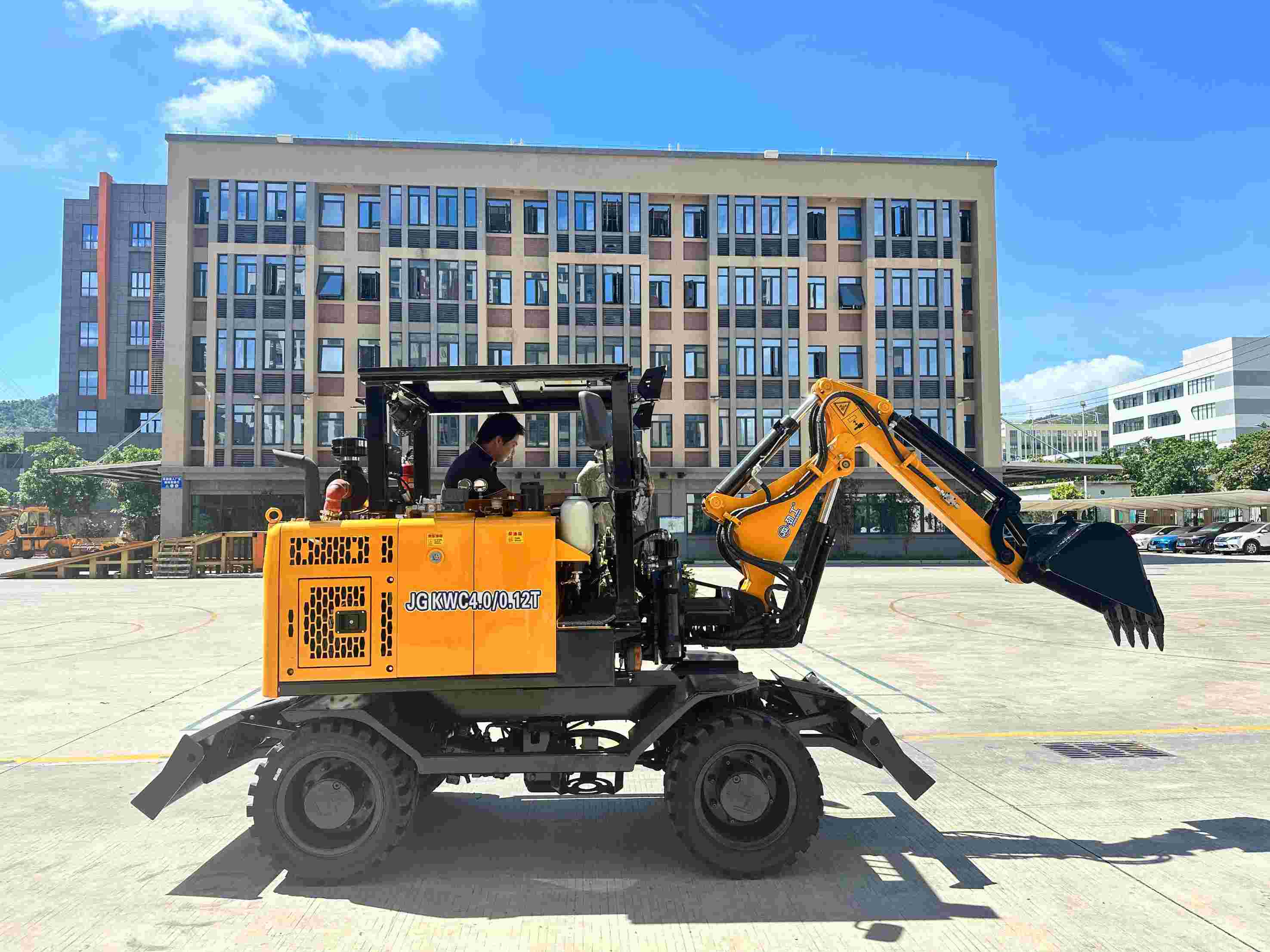
Powered by Xinchai engine: rated power 33.8 kW /2200 rpm; hydraulic working pressure 25 MPa; system flow 90 L/min; variable displacement piston pump 45 ml/r; max travel speed 15 km/h; operating weight 4 000 kg; bucket capacity 0.12 m³; transport dimension 3460 × 1400 × 2345 mm.
This wheel-based unit is engineered for hard-floor underground roadways with frequent short-distance relocation. Its boom-rotation structure delivers 350° boom swivel angle, enabling side-wall rock scaling and side mucking without repeatedly repositioning the whole chassis. Compact 1400 mm transport width allows easy access into narrow mine drifts. Solid mine-grade tires reduce undercarriage wear during transit along main haulage ways. It supports quick switching between rock bucket, grid bucket and hydraulic breaker for mucking, rock scaling and secondary rock breaking tasks. Please note that wheel-type units require firm, non-slippery ground conditions for best performance.
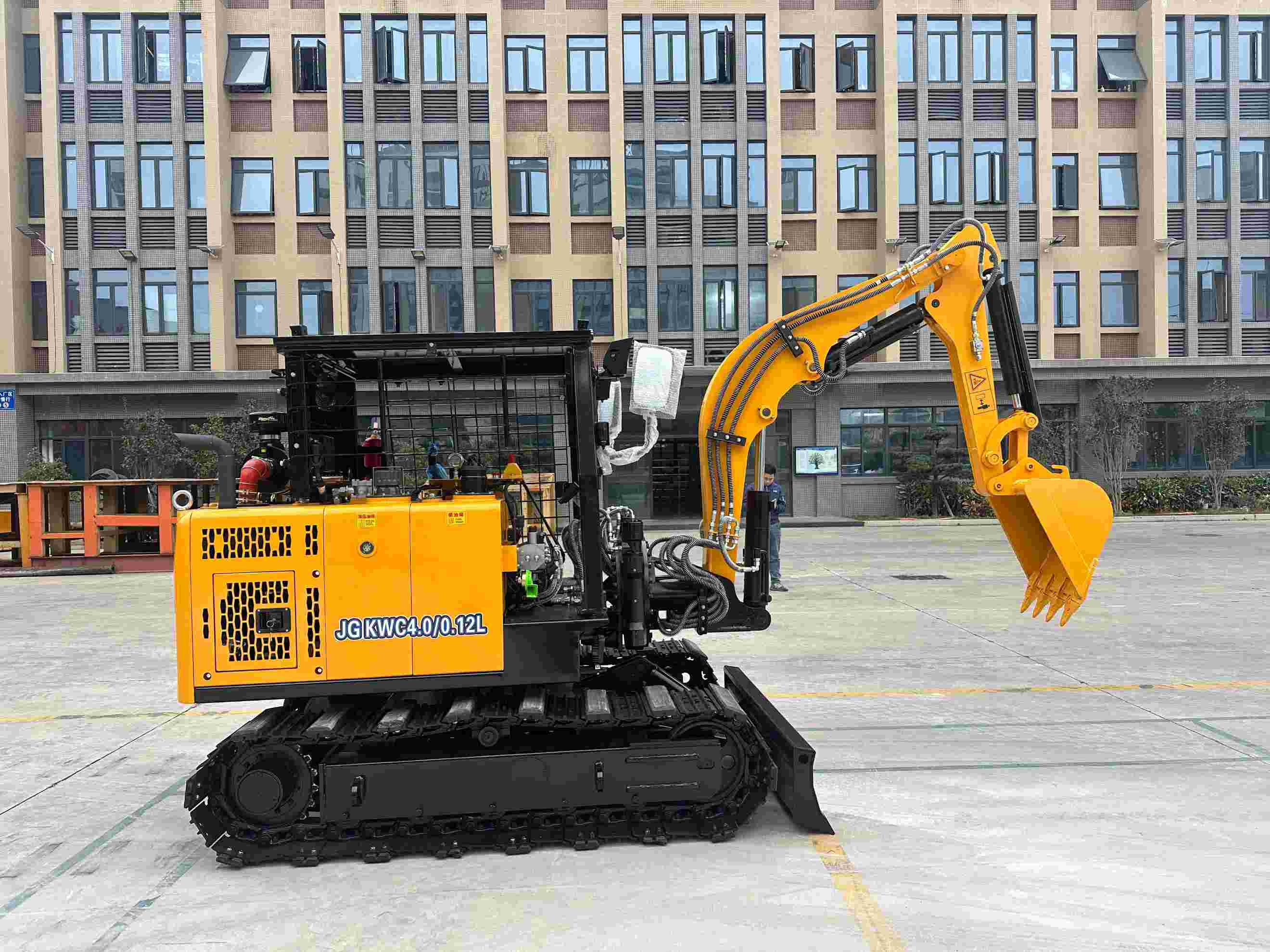
Powered by Xinchai engine: rated power 33.8 kW /2200 rpm; hydraulic working pressure 23 MPa; system flow 90 L/min; variable displacement piston pump 45 ml/r; travel speed 2.2-3.7 km/h; operating weight 4 000 kg; bucket capacity 0.12 m³; transport dimension 5050 × 1550 × 2200 mm.
The crawler-configured model targets mine sites with slippery, muddy or uneven tunnel floors. Heavy-duty track links offer superior grip on soft, debris-covered ground. Equipped with 350° boom-rotation function, it completes side mucking and roadway profiling within confined underground space. Its reinforced cab provides falling-rock protection. This machine can mount rock bucket, ripper or hydraulic drum cutter for mucking, ground loosening and roadway reshaping. Compared with wheel-type version, it trades faster transit speed for all-terrain stability under poor floor conditions.
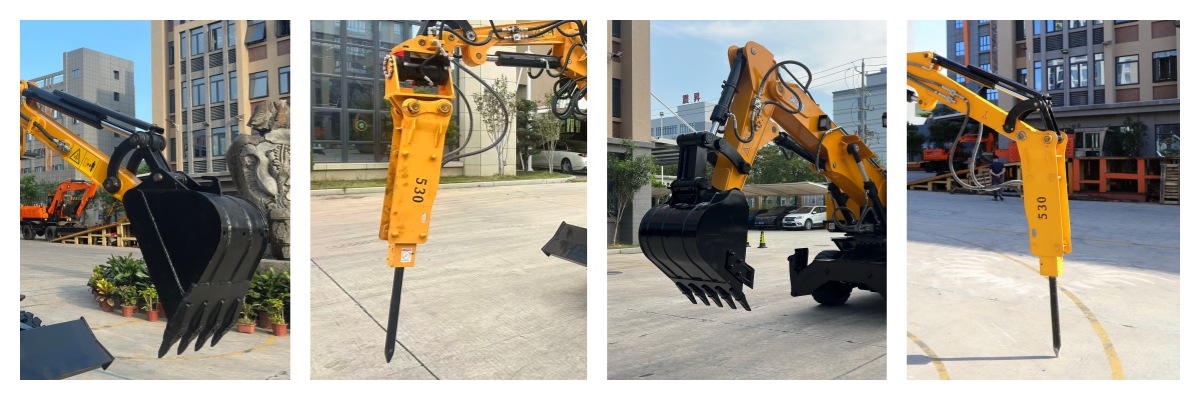
One mining excavator delivers maximum value only with matched attachments:
· Hydraulic breaker: Secondary rock breaking for fallen big rock blocks underground
· Rock bucket / Grid bucket: Mucking, loading fragmented rock and separating large debris
· Ripper: Loosening compact hard ground inside tunnel
· Drum cutter / Rock saw: Trenching, cutting rock for roadway reshaping
Note: Unlike dedicated muckers or tunnel mucking machines, our underground mining excavator can handle multiple tasks beyond pure mucking, including rock scaling and roadway repair.
Important note: Every underground mining excavator faces heavy rock dust. Dust easily invades pivot pins, hydraulic seals and radiators. You still need to follow the pre-shift inspection and periodic maintenance workflows we introduced in previous blog articles. Great factory-reinforced structures reduce failure risk, but cannot skip daily inspection and scheduled service.
Tonnage tells very little for underground mining excavators. Two 4-ton-class machines can have totally different machine width, boom movement modes and ground adaptability. A machine with sufficient power may simply be too wide to drive through your mine drift.
If you move frequently between multiple working faces, crawler-type mining excavators create higher track wear. Wheel-type mining excavators bring faster transit and lower undercarriage maintenance cost for hard mine floors.
Telescopic-boom brings longer reach, yet it adds overall machine dimension. If your drift is extremely narrow, middle-arm swing or boom-rotation version is more practical.
Heavy rock dust accelerates seal, pin-joint and radiator wear. Whether you choose wheel-type or crawler-type mining excavator, daily cleaning for dust and rock debris must be built into site routines.
Q1: Wheel-type or crawler-type mining excavator, which one is better for my mine?
A: If tunnel floor is hard solid rock and you relocate often across drifts and roadways, select a wheel-type mining excavator. If ground is slippery, muddy and uneven, go for a crawler-type mining excavator.
Q2: Can I swap different boom types on one mining excavator?
A: Boom structure is factory-configured. You need to confirm boom solution before ordering according to your tunnel-working requirements. Field conversion is not recommended.
Q3: Which attachment is most used for underground mucking work?
A: Rock bucket or grid bucket for regular mucking; fit hydraulic breaker when large rock blocks need secondary breaking. Compared with standalone muckers and tunnel mucking machines, our excavator offers multitask flexibility.
Q4: Does narrow-width machine always mean lower working performance?
A: Not necessarily. Compact width is specially designed for drift and heading access. Hydraulic power and digging force remain adequate for standard underground mucking and rock scaling tasks.
Underground mine environment sets strict constraints on machine dimension, mobility and boom movement. Never judge mining excavators only by tonnage. Evaluate tunnel size, ground condition, relocation frequency and main work tasks first, then choose chassis type and boom configuration.
Wheel-type mining excavators suit hard-floor mines requiring frequent relocation. Crawler-type mining excavators excel in slippery, uneven tunnel ground. Select matched attachments to improve site productivity.
If you are comparing our unit against dedicated muckers, tunnel mucking machines or underground loaders, feel free to share your drift, heading and roadway dimensions for our professional recommendation.
No matter which configuration you finalize, heavy underground rock-dust environment raises component wear rate. Stick to both pre-shift inspection and periodic maintenance schedules. Robust reinforced mine-grade construction decreases fault probability, yet maintenance routines cannot be omitted.
Request Your Custom Solution
Tell us your drift, heading & roadway dimensions, ground condition and main working tasks. Our engineering team will recommend the best-fit underground mining excavator configuration for your project.
Send us your project details for a free quotation.
No. 88 Pancuo, Jiaonan Village, HeShi Town, Luojiang District, Quanzhou, Fujian, China
tel : +8618805957336
WhatsApp : +8618805957336
e-mel : winny@fjjgjx.com
 rangkaian ipv6 disokong
imbas ke wechat :

 tel : +8618805957336
 e-mel : winny@fjjgjx.com


 peta laman


